
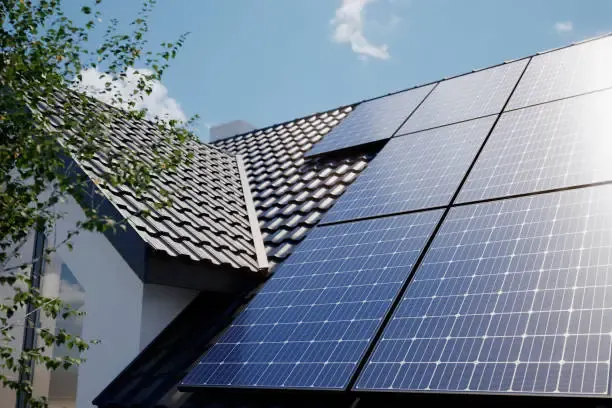
Sizing a solar system correctly is one of the most important steps when planning a solar installation. A properly sized system reduces electricity bills, maximizes efficiency, and ensures you generate enough power to meet your home’s energy needs. Whether you’re considering going off-grid or simply want to lower your utility costs, this guide explains exactly how to calculate the right solar system size for your home.
Why Proper Solar System Sizing Matters
Before diving into the calculations, it’s important to understand why system sizing is crucial:
- Prevents undersizing (leading to insufficient energy production)
- Avoids oversizing, which increases upfront cost without additional benefit
- Improves system efficiency and performance
- Ensures long-term savings and energy independence
Step 1: Determine Your Average Daily Energy Consumption
Your energy usage is measured in kilowatt-hours (kWh). To find your average:
- Check your electricity bills for the last 12 months.
- Add the kWh values together.
- Divide by 12 to get your monthly average.
- Divide that number by 30 to get your daily average consumption.
Example:
- Monthly consumption: 900 kWh
- Daily usage: 900 ÷ 30 = 30 kWh per day
If you cannot access a full year of bills, use the last 3–6 months for estimation.
Step 2: Consider Your Solar Offset Goal
Your “solar offset” is how much of your energy use you want your solar panels to cover.
Options include:
- 100% Offset (fully eliminating your electricity bill)
- 80–90% Offset (most common for grid-tied homes)
- 50% Offset (budget-friendly option)
Example:
If you use 30 kWh/day and want 100% offset, your target production is 30 kWh/day.
Step 3: Check Your Peak Sun Hours
Peak sun hours (PSH) represent the amount of usable sunlight your location receives per day.
This varies by region:
- High-sun regions: 5–7 PSH/day
- Moderate regions: 4–5 PSH/day
- Low-sun regions: 3–4 PSH/day
You can search your city’s average PSH online or ask your installer.
Step 4: Calculate the Required Solar System Size
Use this formula:
Solar System Size (kW) = Daily Energy Use (kWh) ÷ Peak Sun Hours (PSH)
Example:
Daily energy use: 30 kWh
Peak sun hours: 5
System size: 30 ÷ 5 = 6 kW
So, you need a 6 kW solar system to meet your daily needs.
Step 5: Factor in System Losses (10–20%)
Solar systems experience energy losses due to:
- Inverter efficiency
- Temperature loss
- Dust, shading, and wiring
- Panel degradation
A general rule is to add 15% extra capacity.
Example:
6 kW system × 1.15 = 6.9 kW
Round up → 7 kW system recommended
Step 6: Determine Number of Panels Needed
Panels today come in various wattages (350W, 400W, 450W, 550W).
Use the formula:
Number of Panels = System Size (W) ÷ Panel Wattage (W)
Example:
7 kW = 7000W
Using 400W panels:
7000 ÷ 400 = 18 panels
Step 7: Consider Roof Space and Orientation
Your roof characteristics affect performance:
- South-facing panels produce the most energy (Northern Hemisphere).
- East/West roofs produce slightly less but still work well.
- Ensure enough roof space:
A typical 400W panel needs ≈ 20 sq. ft.
Space Example:
18 panels × 20 sq. ft. = 360 sq. ft. required
Step 8: Evaluate Your Future Energy Needs
Consider whether your energy use may increase soon:
- Planning to purchase an electric vehicle (EV)?
- Adding air conditioning?
- Expanding your home?
- Planning a pool or electric water heater?
It’s better to size slightly larger now than upgrade later.
Step 9: Grid-Tied vs. Off-Grid Sizing
Grid-Tied Systems
- Smaller system needed
- No batteries required
- Net metering helps offset nighttime usage
Off-Grid Systems
- Larger system required
- Must include batteries
- Must cover nighttime and cloudy-day consumption
Off-grid calculation usually requires a solar professional.
Example Solar Sizing Summary
| Home Type | Avg Daily Use | PSH | Recommended System | No. of Panels (400W) |
|---|---|---|---|---|
| Small Home | 15 kWh | 5 | 3.5 kW | 9 panels |
| Medium Home | 30 kWh | 5 | 7 kW | 18 panels |
| Large Home | 45 kWh | 5 | 10.5 kW | 27 panels |
Final Thoughts
Sizing your solar system correctly ensures maximum savings, efficiency, and long-term value. By understanding your energy consumption, sunlight availability, and equipment requirements, you can confidently determine the right system size for your home.