
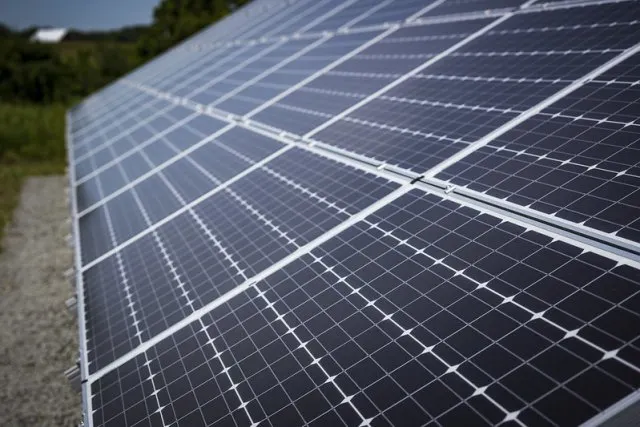
As solar energy continues its rapid growth, 2026 is shaping up to be a breakout year for next-generation solar panel technologies. Advances in materials, design, and integration are pushing the boundaries of efficiency, flexibility, and sustainability. Here’s a look at the most promising solar innovations on the horizon.
1. Tandem Cells & Perovskite Revolution
Perovskite-silicon tandem solar cells are among the most talked-about innovations for 2026. By stacking perovskite material on top of traditional silicon, engineers can capture a broader spectrum of sunlight, significantly boosting efficiency. Recent R&D has demonstrated tandem cells moving past 33% efficiency in some lab settings. Rayzon Solar+1
A particularly exciting development: flexible perovskite/silicon monolithic tandem cells. Researchers have achieved nearly 29.9% efficiency in a flexible design, which could lead to ultra-lightweight solar panels suitable for curved surfaces or portable applications. arXiv
Beyond traditional tandems, scientists are also working on lead-free triple-junction cells, using non-toxic perovskite and kesterite materials to improve sustainability without sacrificing performance. arXiv
2. Ultra-Thin and Flexible Panels
In 2026, expect to see more ultra-thin and flexible solar modules hitting the market. Countries like Japan are already investing heavily in very thin perovskite films that can be integrated into buildings, stadiums, and even on curved structures. Financial Times
These lightweight panels can be printed or laminated, making them ideal for portable energy applications, BIPV (Building-Integrated Photovoltaics), or areas where traditional rigid panels are not feasible.
3. Transparent Solar Windows
Semi-transparent perovskite solar cells are advancing fast. By engineering super-thin perovskite layers and optimizing interfaces, researchers are pushing transparency and efficiency simultaneously. arXiv+1
This technology will likely scale up in 2026, enabling windows and facades that generate power without compromising design or natural light — a critical innovation for urban solar integration.
4. Bifacial & 3D Solar Designs
Bifacial solar panels, which capture light from both their front and back sides, are becoming more efficient and cost-effective. These modules can generate 10–20% more energy by harvesting reflections and indirect sunlight. makeeverythingbetter.org+1
On top of that, 3D solar panel architectures are gaining traction. These designs, such as stacked or folded modules, increase surface area without requiring more ground space — especially useful in urban or limited-space environments. makeeverythingbetter.org
5. Smart Solar with AI & IoT
Artificial intelligence (AI) and Internet of Things (IoT) technologies are revolutionizing how solar panels operate:
- AI-driven tracking systems adjust panel tilt and orientation in real time to maximize solar yield. Aigen1
- Predictive maintenance uses machine learning to detect issues like shading, panel soiling, or micro-cracks before they significantly reduce output. JMS Energy
- Connected systems allow homeowners and grid operators to monitor energy generation and consumption more precisely, improving efficiency and reducing downtime. illumineenergy.com+1
6. Better Storage: Solid-State & Integrated Systems
Solar isn’t just about panels — storage is also evolving. By 2026, solid-state batteries could be more widely integrated into solar systems. These batteries promise:
- Higher energy density
- Longer lifespans
- Improved safety over traditional lithium-ion cells pvgis.com
When combined with advanced solar modules, these storage systems will enable 24/7 clean energy, making solar power more reliable and resilient.
7. Quantum Dot Enhancement
Quantum dots are emerging as a way to supercharge traditional solar panels. These tiny semiconductor crystals can be applied to the underside of panels, capturing a broader spectrum of light—including wavelengths that conventional cells miss. The Wall Street Journal
This layer can be added like a “paint” and has the potential to significantly boost the efficiency of existing solar technologies without a full redesign.
8. Sustainability & Recycling
As adoption grows, manufacturers are focusing more on recycling and material sustainability. Innovations in solar recycling aim to recover up to 90% of key materials, such as silicon and rare metals, making solar production more circular. flamesolren.com
At the same time, “solar skins” — panels that blend visually with roofs or building exteriors — are helping solar installations become more architecturally integrated without compromising performance. Venture Steel Group
Why These Innovations Matter for 2026
- Greater Efficiency: Higher-efficiency cells like perovskite tandems mean more power from the same panel area.
- Design Flexibility: Ultra-thin, flexible, and transparent panels open up new use cases — from windows to portable energy.
- Sustainability: Lead-free materials and better recycling reduce environmental impact.
- Reliability: Smart panels and storage integration improve performance and resilience.
- Cost Reduction: Emerging manufacturing processes (e.g., printing perovskite) could lower production costs long-term.
Challenges to Overcome
Despite the promise, there are a few hurdles:
- Durability & Stability: Perovskite materials still need more proven long-term stability to compete fully with silicon.
- Scaling Production: Lab breakthroughs must be translated into mass manufacturing.
- Cost of New Materials: Some advanced materials (e.g., quantum dots) are still expensive to produce at large scales.
- Regulation & Certification: New panel types, especially for buildings (BIPV), need to meet safety and building-code standards.
Final Thoughts
2026 is poised to be a pivotal year for solar panel technology. With leaps in perovskite tandems, transparent and flexible modules, and AI-driven smart systems, the solar industry is moving toward higher performance, broader adoption, and more sustainable production.
These innovations don’t just make solar more efficient — they make it more adaptable, aesthetically integrated, and reliable. For businesses, homeowners, and utilities alike, they represent a major step toward a cleaner, more resilient energy future.