
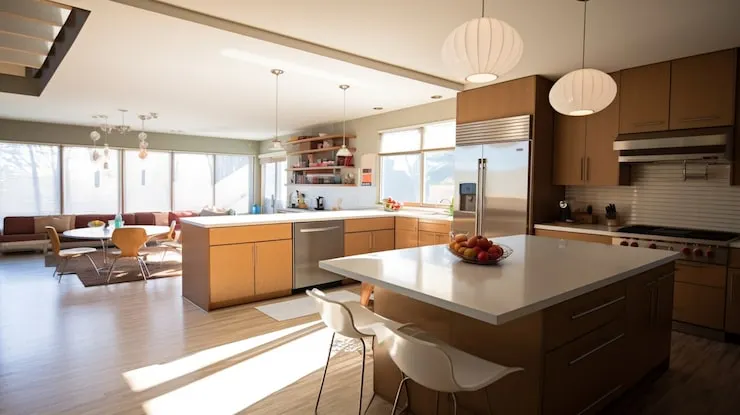
Choosing between an open-concept or closed kitchen layout is one of the biggest decisions homeowners face during a remodel. Each layout offers unique advantages in terms of style, functionality, privacy, and lifestyle. Understanding the pros and cons of both can help you design a kitchen that matches your needs, aesthetic preferences, and the way your household actually uses the space.
Below, we break down the differences between open-concept vs. closed kitchens so you can decide which layout is the right fit for your home.
What Is an Open-Concept Kitchen?
An open-concept kitchen removes walls and barriers so the space connects seamlessly with the dining area, living room, or both. It creates a large, unified environment perfect for modern lifestyles.
Key Features:
- Fewer walls and partitions
- A spacious, continuous flow
- Integrated cooking, dining, and living zones
- Often includes a large island or peninsula
Benefits of an Open-Concept Kitchen
1. Better Social Interaction
Open kitchens allow you to cook, entertain, and interact with family or guests at the same time. No more feeling isolated while preparing meals.
2. Enhanced Light and Airflow
Removing walls allows natural light to travel freely, making your home feel brighter and more inviting.
3. Modern, Airy Aesthetic
Open layouts offer a sleek, contemporary look—perfect for homeowners who love spacious, minimal designs.
4. Improved Traffic Flow
With fewer barriers, people can move more freely throughout the space, especially useful for large families or frequent gatherings.
Drawbacks of an Open-Concept Kitchen
1. Noise Travels Easily
Open spaces lack sound barriers, so kitchen noise—from dishwashers to cookware—can disrupt nearby activities.
2. Cooking Odors Spread
Smells from cooking can move into the living and dining areas, especially in homes without proper ventilation.
3. More Pressure to Keep the Kitchen Clean
Because everything is in full view, clutter and mess become more noticeable.
4. Fewer Walls for Cabinets
Less wall space means fewer opportunities for upper cabinets, which may reduce storage unless planned carefully.
What Is a Closed Kitchen?
A closed kitchen is a more traditional layout where walls or partitions separate the kitchen from other areas of the home. This layout creates a dedicated, private workspace for cooking and food preparation.
Key Features:
- Distinct, separate room
- More wall space for cabinets and shelves
- Clear division between cooking and living areas
Benefits of a Closed Kitchen
1. More Privacy
Closed kitchens create a quiet, focused environment, ideal for passionate cooks who prefer less distraction.
2. Better Odor and Noise Control
Walls help contain cooking smells and reduce noise, contributing to a calmer home environment.
3. More Storage Opportunities
With more walls available, you can install additional cabinets, shelving, or pantry spaces.
4. Easier to Maintain Cleanliness (Visually)
Guests won’t see dirty dishes, spills, or prep mess.
Drawbacks of a Closed Kitchen
1. Limited Space Perception
Closed layouts can feel smaller or more confined, especially in compact homes.
2. Less Social Interaction
The cook may feel isolated from family members or guests during meal preparation.
3. Reduced Natural Light Flow
Walls may block windows or limit how light travels through the home.
Open-Concept vs. Closed Kitchen: Key Differences
| Feature | Open-Concept Kitchen | Closed Kitchen |
|---|---|---|
| Space Feel | Spacious, airy | Cozy, private |
| Interaction | Great for socializing | Limited interaction |
| Storage | Less upper cabinet space | More storage potential |
| Noise Control | Minimal sound barriers | Excellent noise control |
| Odor Containment | Odors spread easily | Smells stay contained |
| Cleaning | Visible clutter | Mess stays hidden |
| Design Style | Modern, contemporary | Traditional or functional |
How to Choose the Right Layout for Your Home
Choose an Open-Concept Kitchen If You:
- Love hosting and entertaining
- Prefer modern, spacious designs
- Value connectivity between cooking and living spaces
- Have good ventilation or plan to install it
Choose a Closed Kitchen If You:
- Prefer privacy while cooking
- Want separate, defined spaces
- Need lots of storage
- Want to control noise and odors
- Live in a home with traditional architecture
Blended Layouts: The Best of Both Worlds
Many homeowners are now choosing semi-open kitchens that combine the advantages of both layouts.
Popular blended solutions include:
- Half walls or partial partitions
- Glass sliding doors
- Decorative room dividers
- Island-only separation
- Wide doorways without full walls
These designs offer visual openness while providing light separation and functional benefits.
Final Thoughts
Both open-concept and closed kitchens offer unique advantages, and the right choice depends on your lifestyle, home layout, and personal preferences. Whether you prefer the modern flow of an open kitchen or the cozy privacy of a closed one, thoughtful planning ensures your kitchen becomes a functional, beautiful space that perfectly fits your needs.